Kate Moss by Juergen Teller
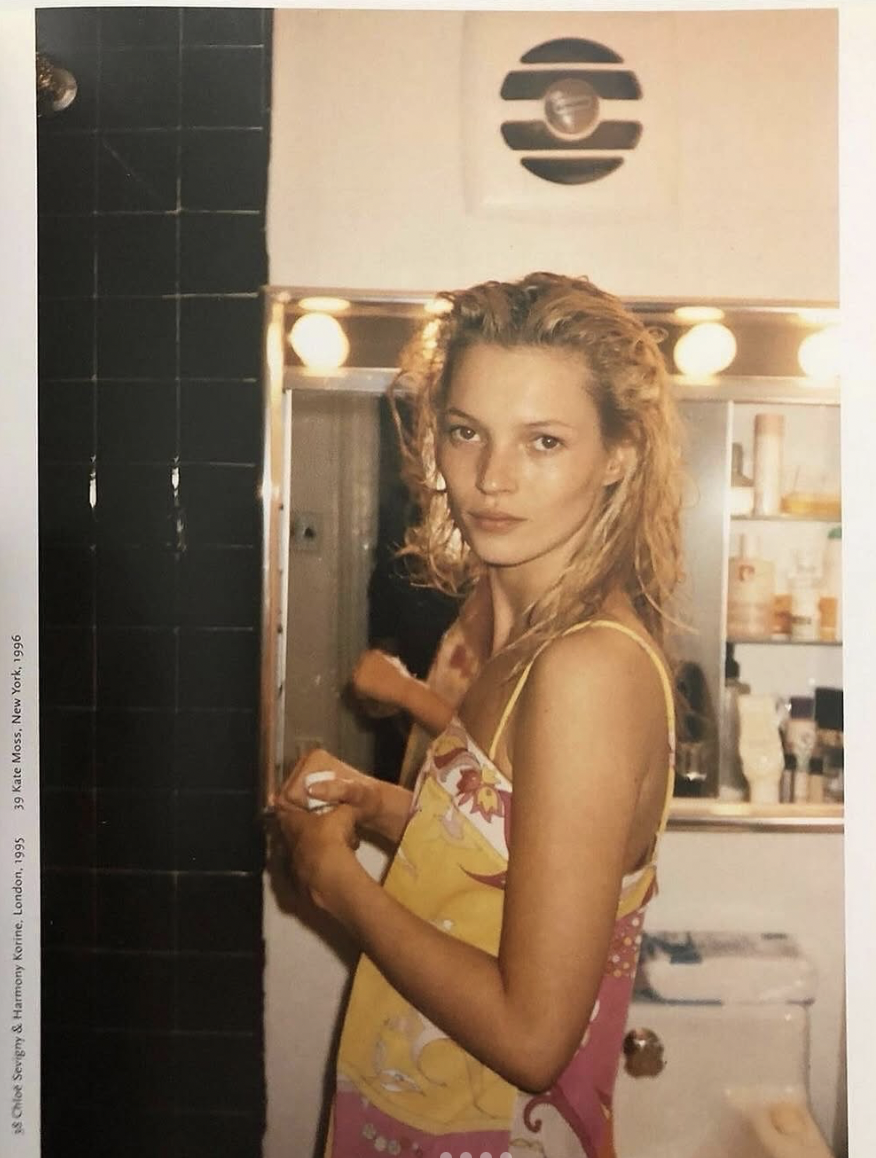
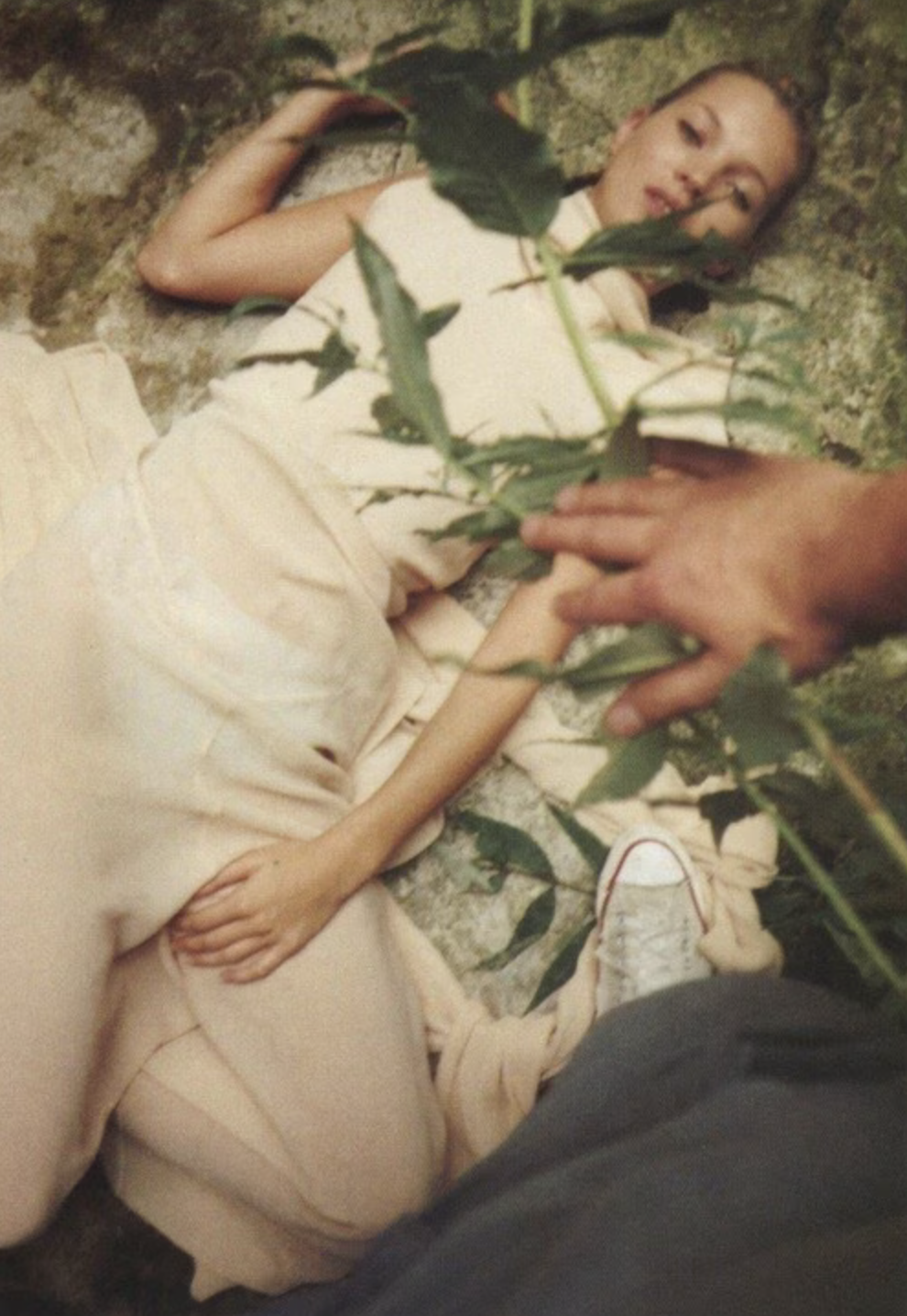
In Juergen Teller’s 1996 photographs of Kate Moss, glamour is stripped back to something raw and human. Taken in a small, sunlit apartment rather than a glossy studio, the images show Moss without the usual layers of artifice: no elaborate styling, no heavy retouching, just the natural light of an ordinary room and Teller’s unflinching lens. These portraits marked a decisive shift in the visual language of fashion, challenging the perfectionism of the 1990s and redefining what beauty could look like.
Moss appears unguarded yet fully aware of the camera, her presence oscillating between intimacy and performance. Teller captures her in bed, barefoot, sometimes laughing, sometimes expressionless, her body angled casually against white sheets. The photos resist spectacle. They are neither fashion fantasy nor pure documentary, but something in between, a negotiation between subject and photographer, control and exposure. Teller’s work from this period often explores this tension, treating the image not as a product but as a conversation.
What made these images radical in their time was their refusal of glamour’s smoothness. In a decade dominated by the supermodel ideal and luxury excess, Teller’s aesthetic felt almost confrontational. His use of direct flash, natural imperfections, and everyday environments cut through the airbrushed language of fashion photography. Moss, often associated with fragility and youth, became instead a figure of realism: flawed, tactile, and alive. The intimacy of the setting made the viewer complicit, as though trespassing into a private world that was both authentic and carefully constructed.
The collaboration between Moss and Teller also reflects a wider shift in how celebrity and authenticity were being reimagined in the late 1990s. As fashion began to flirt with grunge and anti-glamour, photographers like Teller, Corinne Day, and Nan Goldin turned the camera inward, documenting their subjects as part of their own lived worlds. The Moss portraits encapsulate this movement, blending fashion imagery with emotional honesty. They signal the rise of a more self-aware visual culture, one that questioned the distance between model and audience.
Viewed today, the 1996 series feels almost prophetic. The aesthetic of imperfection that Teller pioneered has since become embedded in how we understand authenticity in images, from Instagram’s “casual” poses to the contemporary fascination with behind-the-scenes realism. What once felt transgressive now reads as foundational. Yet Teller’s photographs retain their power precisely because they resist polish; they remind us that truth in an image is always partial, always mediated through trust and intimacy.
More than a portrait of Kate Moss, these photographs capture a cultural turning point. They dissolve the boundaries between high fashion and the everyday, between beauty and vulnerability. Teller’s lens exposes not just the model but the machinery of looking itself, revealing how desire, exhaustion, and sincerity coexist within the frame. In stripping back the illusion, the images didn’t reject beauty, they redefined it, making imperfection itself enduring.