When Silence Speaks: Maison Margiela’s Mouthpiece Moment
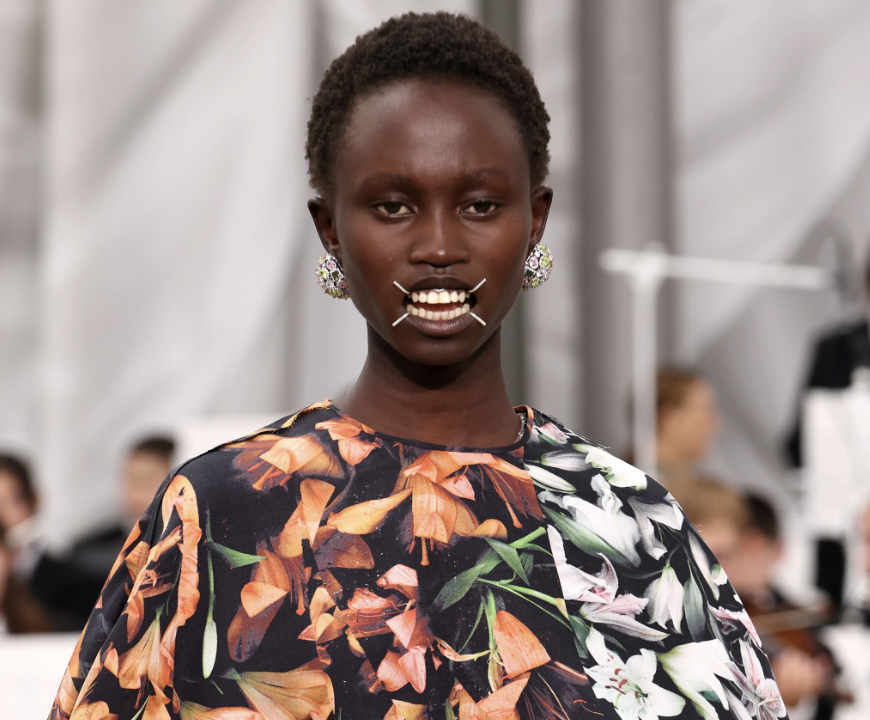
At Maison Margiela’s latest show, models walked the runway with rigid, surgical-looking mouthpieces that held their lips open in an expression somewhere between awe and discomfort. Each mouth was stretched at the corners by a four-stitch motif, Margiela’s signature symbol, turning the body’s most expressive feature into a site of tension. It was a visual that lingered long after the clothes disappeared from view, a moment that forced spectators to question the uneasy boundary between beauty and violation.
The mouthpiece, designed under Glenn Martens’s creative direction, was not a random accessory but an extension of Margiela’s long-standing fascination with concealment and exposure. Traditionally, the house has explored ideas of anonymity through masks, veils, and blurred identities as a critique of fashion’s obsession with the face and the individual. This season’s decision to open the mouth rather than hide it felt like an inversion of that language. Instead of obscuring identity, Martens’s design seemed to dissect it, reducing expression to a physical constraint. The effect was both striking and sinister.
In the context of our image-driven culture, the mouthpiece reads like a provocation. The mouth is not just a body part; it is symbolic of voice, expression, and speech. To restrain or exaggerate it in this way is to comment on how our digital selves are constantly performing, speaking, and oversharing. On platforms built around voice and self-presentation, the mouthpiece feels like a gag disguised as ornament. It silences while calling attention to the act of silence itself.
The gesture also fits within a wider visual trend: the return of discomfort as aesthetic. Across fashion and art, there has been a move towards body distortion, awkward silhouettes, and deliberate unease. The Margiela mouthpiece reflects this shift, reminding us that fashion’s power often lies in its ability to disturb as much as to decorate. Viewers’ reactions ranged from fascination to disgust, echoing the mixed responses to other confrontational runway moments, from Balenciaga’s post-apocalyptic set designs to Marine Serre’s dystopian athleticism.
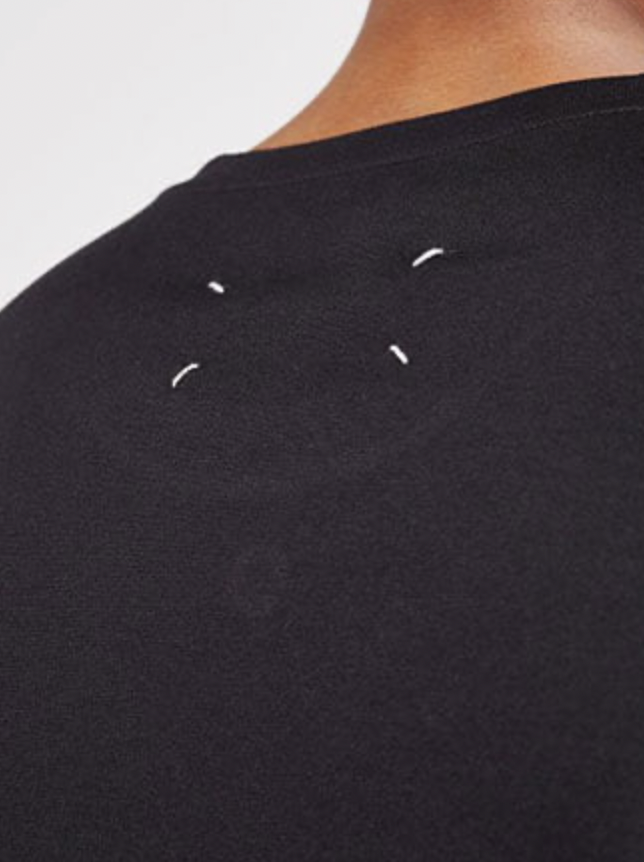
Yet beyond shock value, there is a conceptual sharpness to Margiela’s choice. By transforming the brand’s discreet four-stitch logo into a device that physically alters the wearer, Martens literalises what branding does metaphorically: it reshapes bodies and identities. The mouthpiece becomes a small sculpture of consumer culture, a commentary on how we internalise aesthetics and how fashion’s symbols move from garment to flesh.
Some critics argued that the device distracted from the clothes, but perhaps that was the intention. Margiela has always used disruption as a mirror. The mouthpiece compels us to look and to confront our own complicity in the spectacle. It asks whether silence can be as communicative as speech, and whether the most powerful statements in fashion are those that stop us from talking.
In an era of endless expression, Margiela’s mouthpieces offer a kind of aesthetic pause. They turn silence into an image and remind us that sometimes, what is not said can still speak volumes.